FedEx Developer Portal
Tank Design · 2022–2024 · Lead Product and UX Designer
Consolidated five disconnected developer tools into a single governed platform for onboarding, API discovery, sandbox keys, and production credentials — now live for thousands of FedEx developers worldwide.
They asked for documentation. The problem was onboarding.
Background
FedEx’s developer experience was split across five disconnected tools. Five logins, no shared patterns, no single source of truth — and developers were abandoning before they ever saw product value.
The project came to Tank Design as a documentation refresh. Research showed the barrier wasn’t content: developers never got far enough to read it. I made the case for a full platform redesign instead, and won the budget to deliver it.
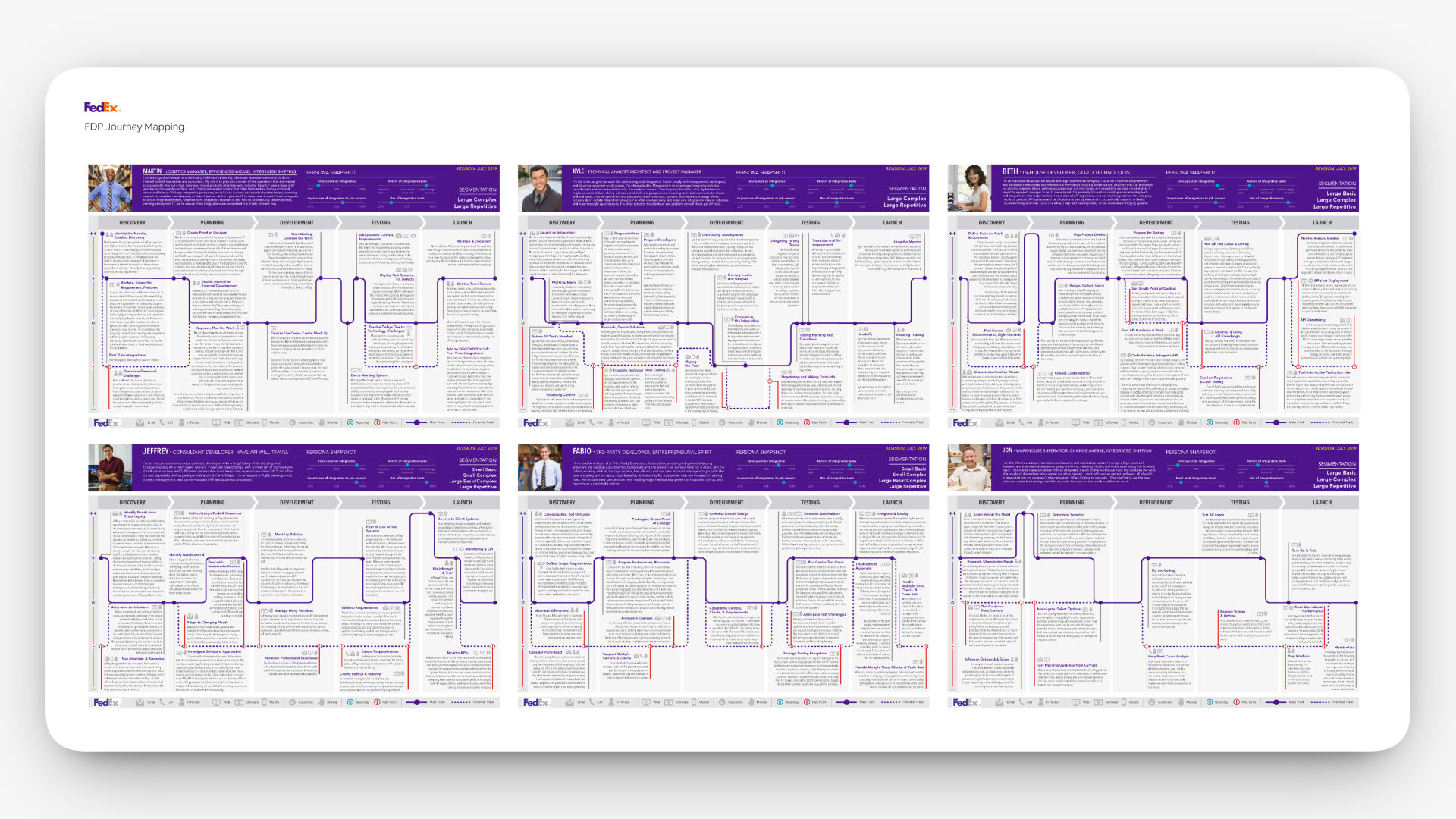
From solo developers moving fast to enterprise teams managing complexity, mapped across five lifecycle phases.
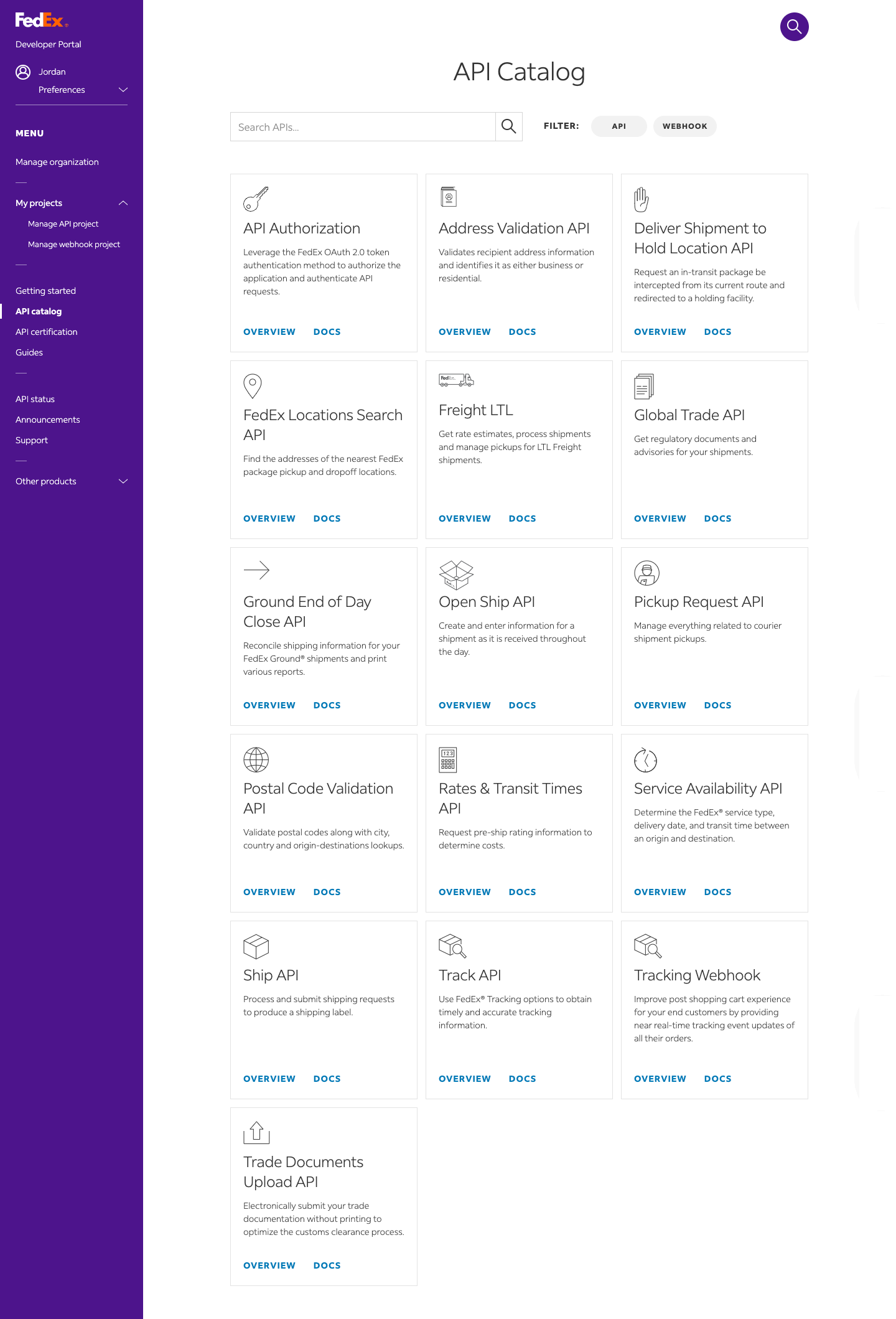
Shared patterns for API status, billing, webhooks, and account management, governed as a single system.
My role
I led product and UX design for nearly three years, working with FedEx engineering and product teams from research through delivery: journey mapping, information architecture, interaction design, the design system, and biweekly usability testing across four countries.
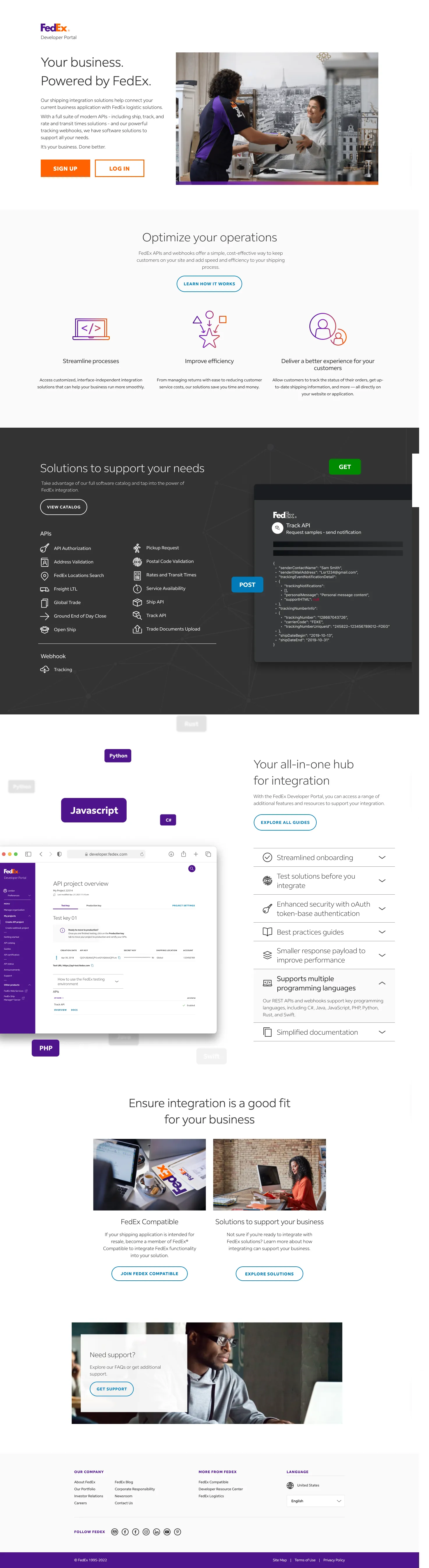
Confidence first, commitment second
Developer platforms hide their value behind sign-up walls. This one answers three questions before asking for an account: what can I build, how hard is it, and how good are the docs.
Designing the failure paths
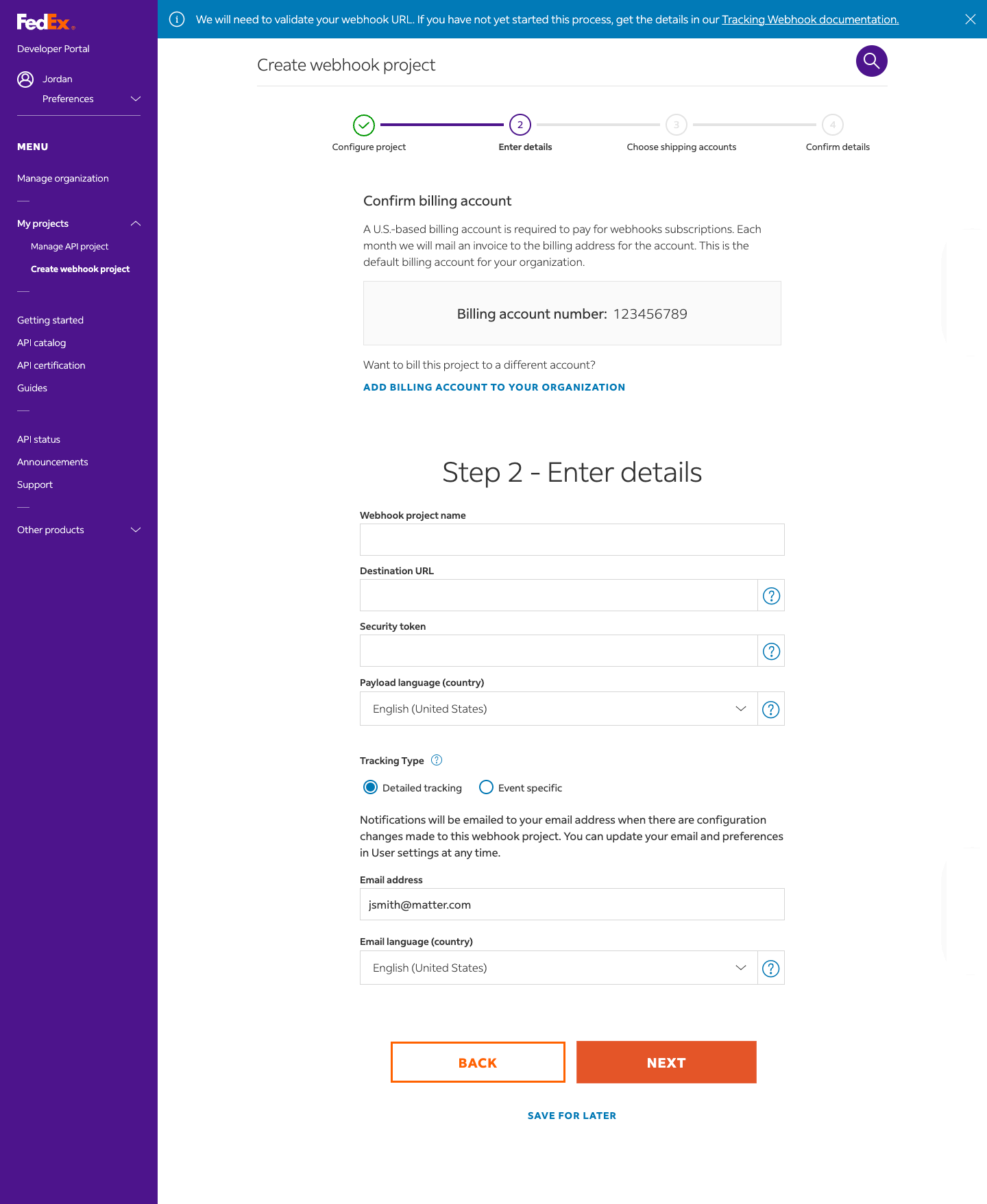
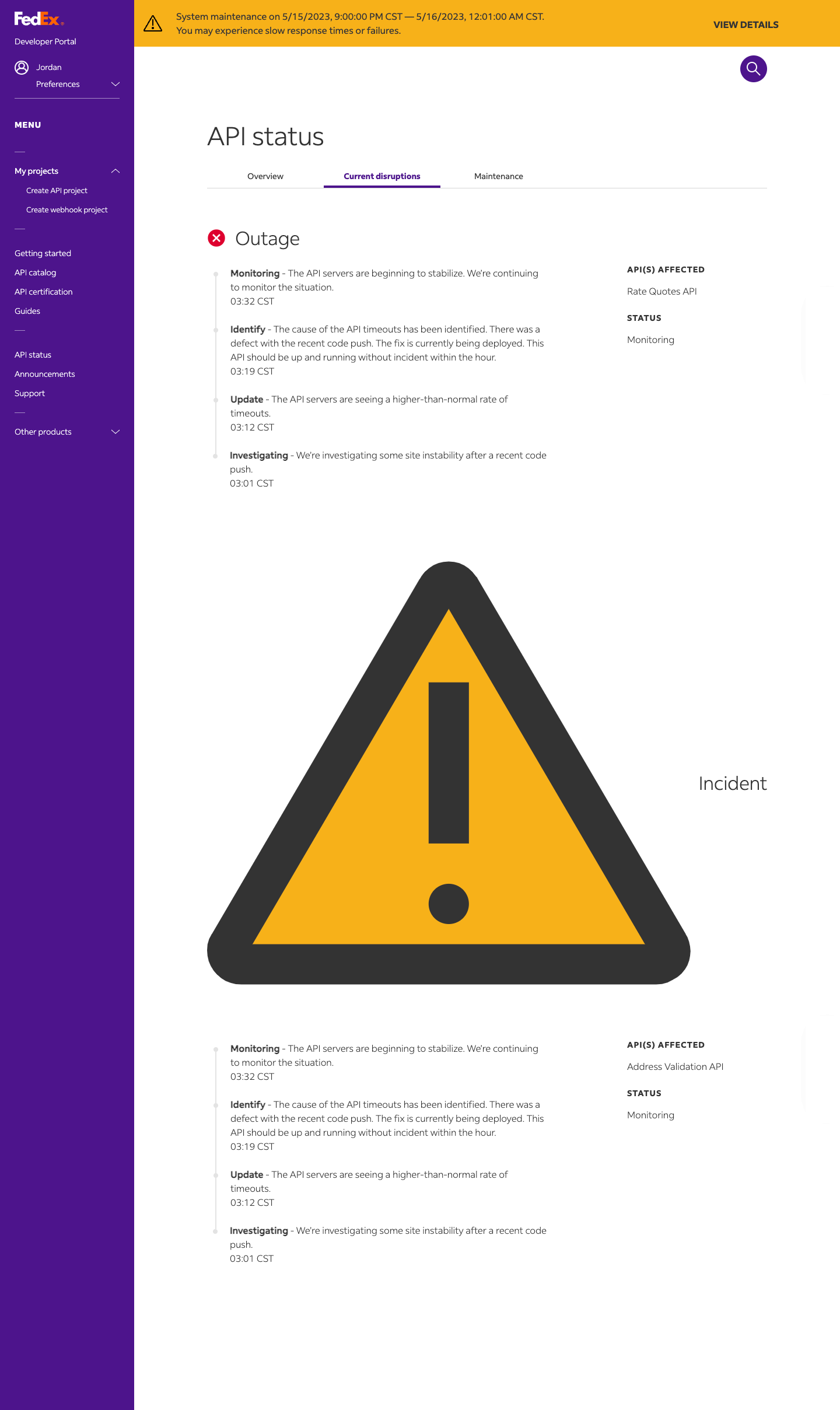
Webhooks push real-time shipment data into warehouse dashboards, and a misconfiguration breaks a logistics loop. I designed for the four paths that don’t end in success: no billing account, no shipping account, accounts already associated, contributor without permission.
Tests with real developers told us trust is built or lost in the failure paths. Each one became a first-class lane with its own content, actions, and recovery.
A platform that grows with you
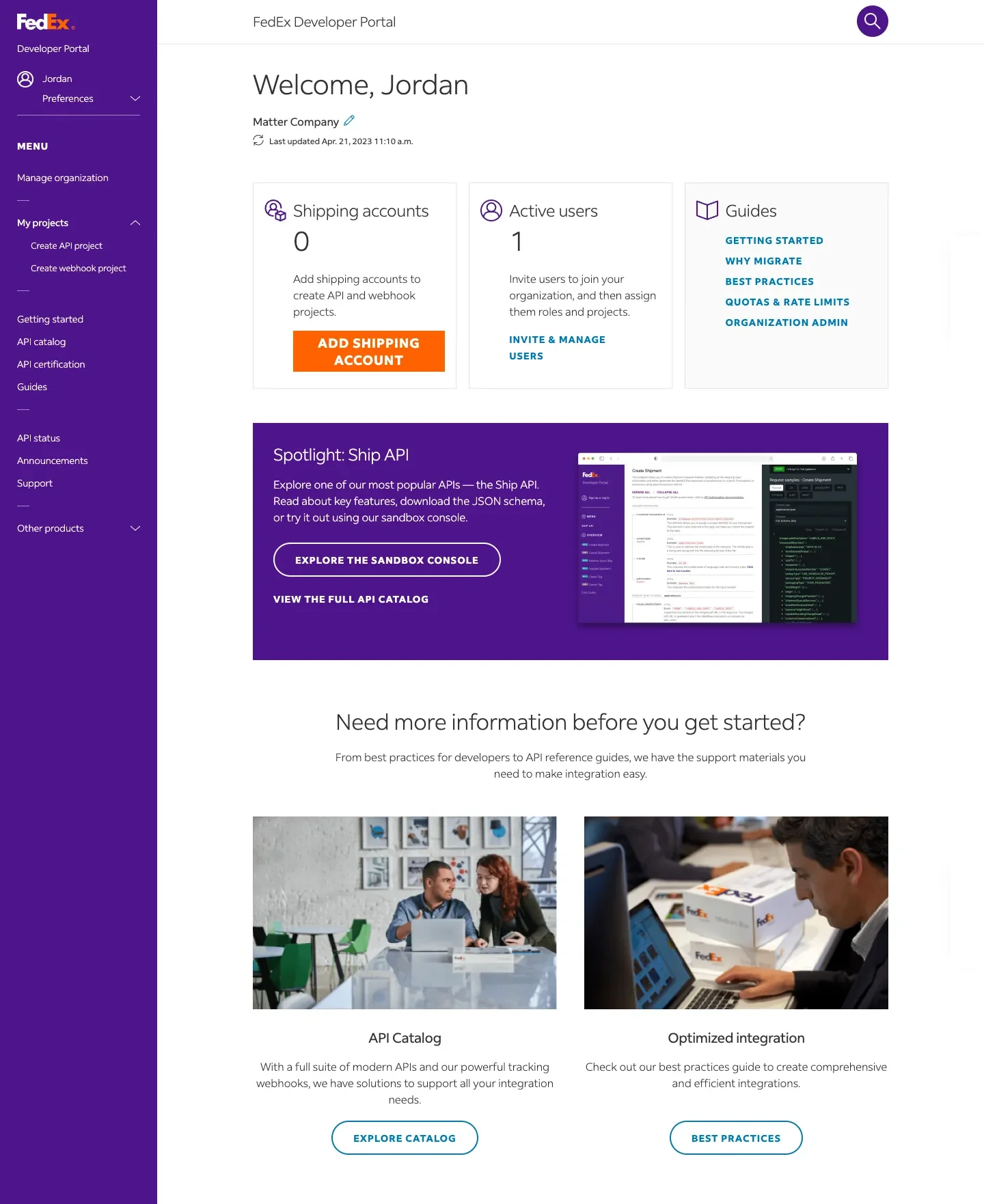
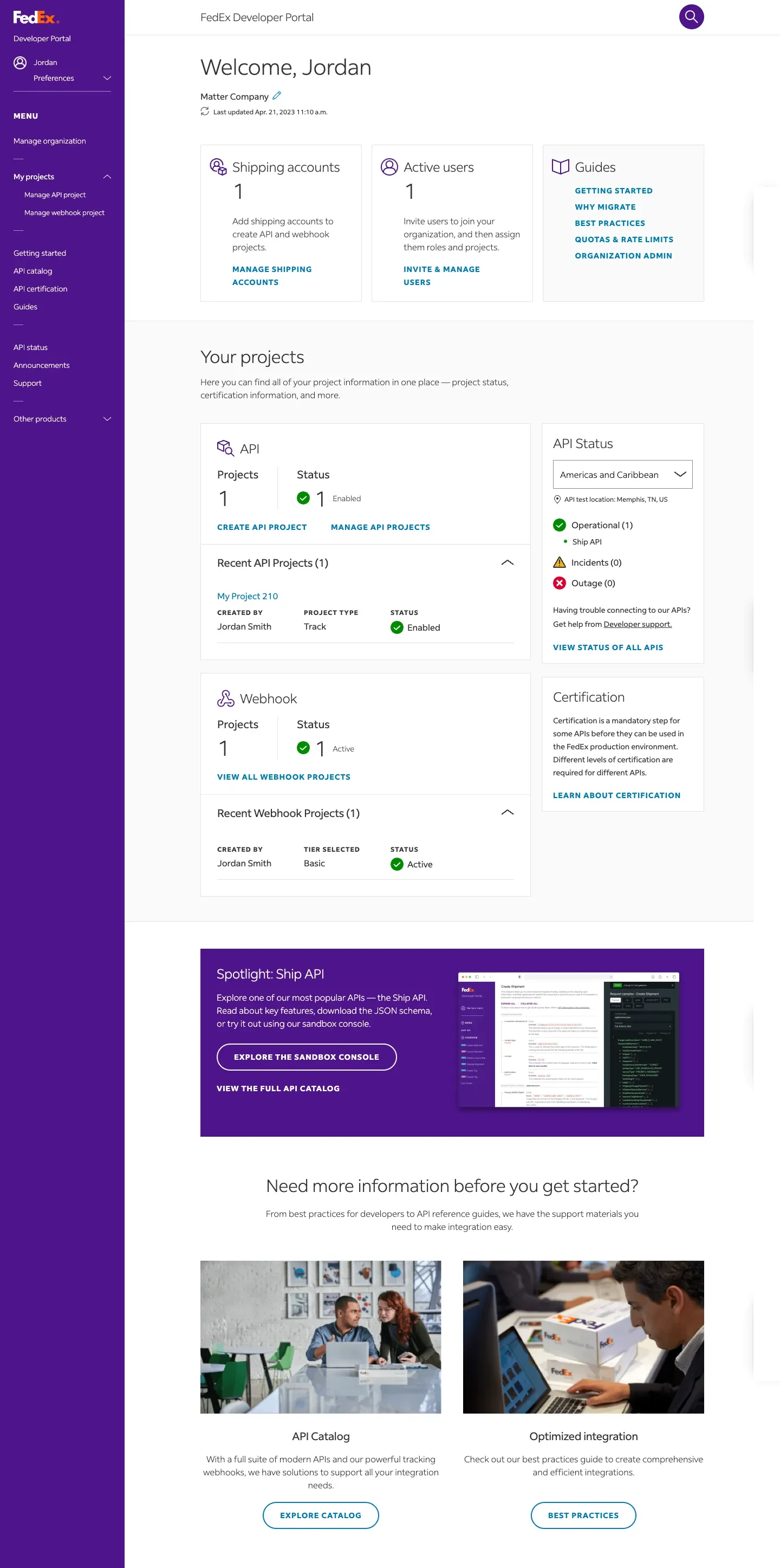
The post-login home isn’t one screen. It’s four states: new user, organization created, accounts added, full administrator. Simple on day one, deeper as needs grow.
Notifications, authored as a system
Toast, alert, modal, and gate are named types with shared structure and variable interpolation. The live copy file uses the same primitive across every surface — consistency at scale, without copy-pasting.
The architecture
Onboarding through production, every key moment mapped. The platform’s structure was shaped decision by decision. Click through the five calls below to see how it took shape.
Built to live inside FedEx’s 1DX system
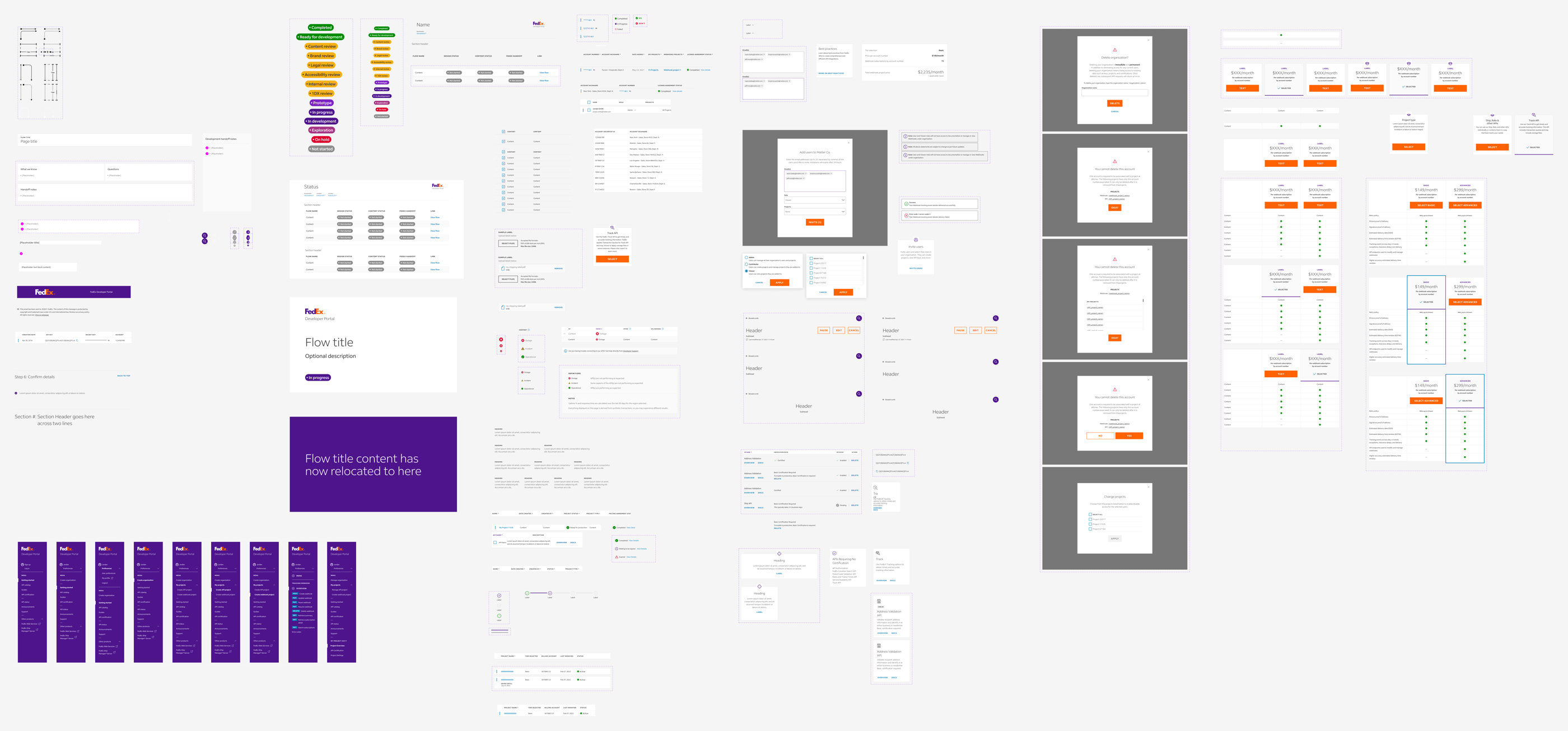
I led the design library updates, running weekly workshops with FedEx’s internal brand team so the platform and the broader system evolved together. Every pattern authored once, documented with its full set of states.
Outcome
The platform is live in production — pre- and post-login, APIs, webhooks, organization admin, and the design library — used by thousands of FedEx developers worldwide and validated through continuous research.
leading product and UX across the entire platform.
test rounds a year — biweekly research with real developers.
PI design briefs across two product increment cycles.
The calls that shaped it
Reframed a docs project as a platform redesign.
Research said developers left before the docs. I argued for the bigger scope, and won the budget.
First-classed the in-progress lane.
Saved-but-incomplete projects, permission gates, and system states treated as primary surfaces, not edge cases.
Authored notifications as a system.
Toast, alert, modal, gate as named types with shared templates. One pattern, every surface.
Let’s make something work.
Boston & remote · Open to full-time & contract