Skype, off the desktop.
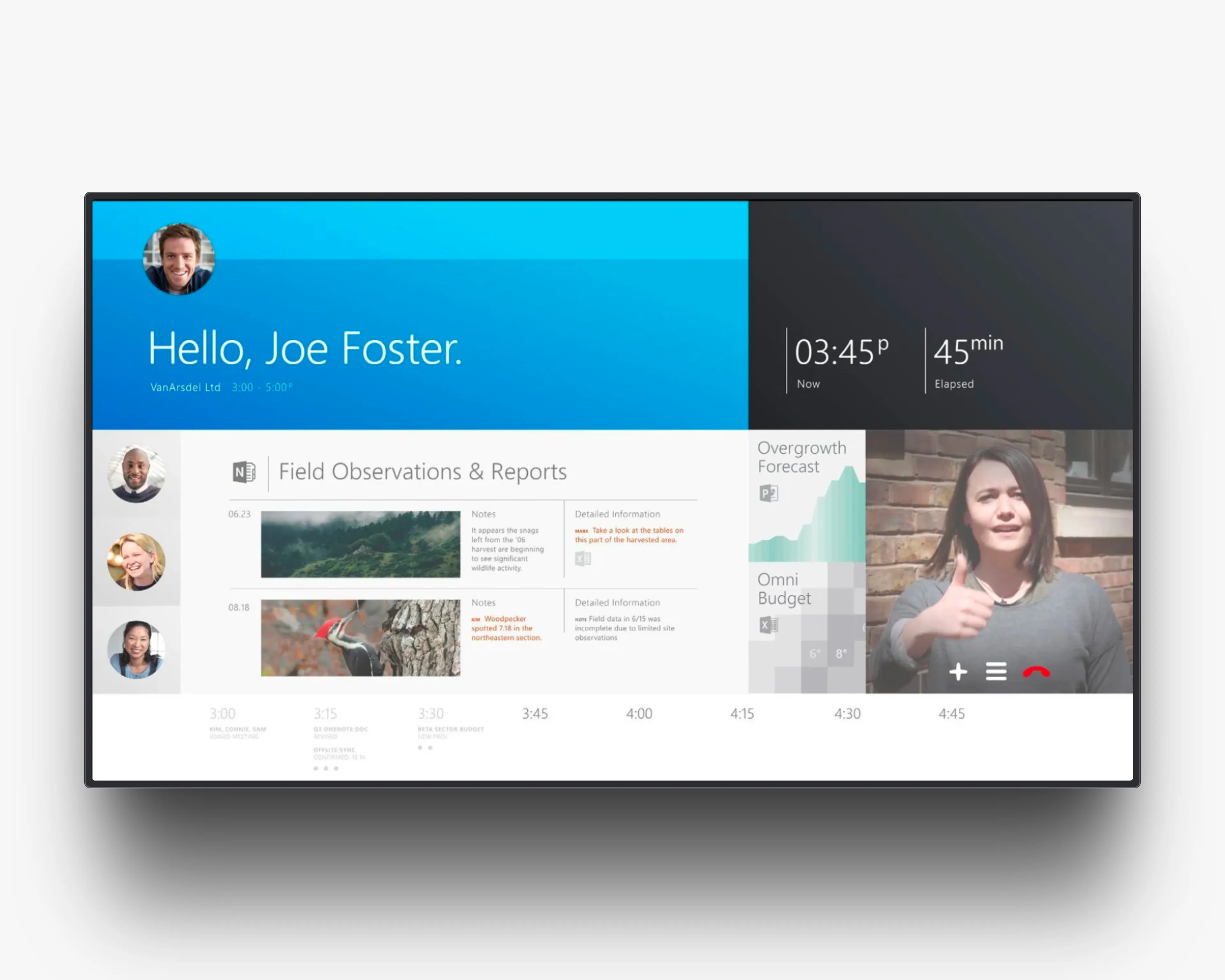
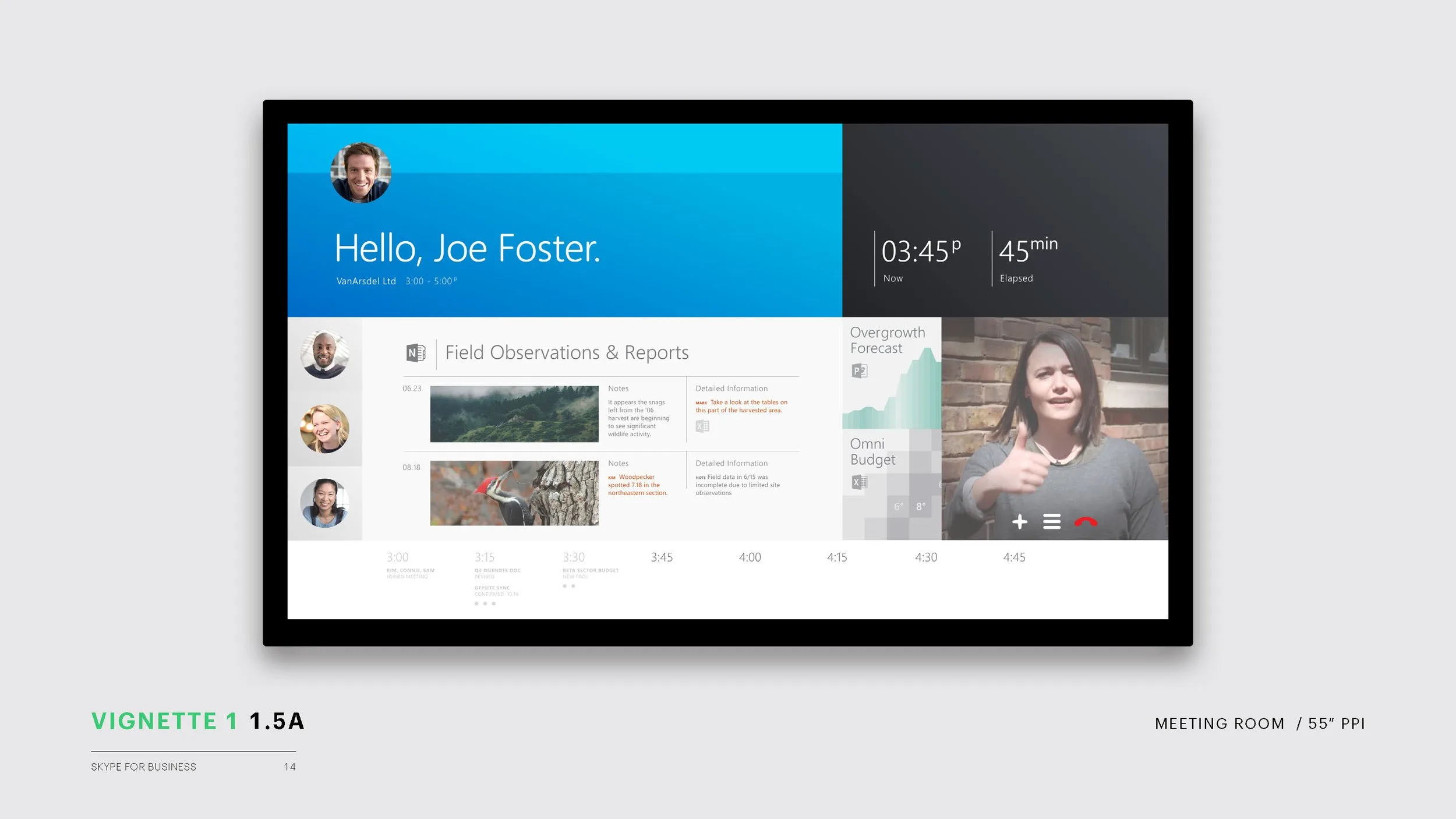
Microsoft asked for a vision of Skype for Business beyond the chat window. How it would show up on the surfaces work actually happens on. The result was a set of vignettes built around real work scenarios: a meeting room, a control tower, a clinical broadcast, a phone in transit.
challenge
Skype for Business existed inside a single rectangle: the desktop client. But the work it was supposed to support didn’t. Conversations spilled into meeting rooms, phones, broadcasts, and back again. The product had to be everywhere the work was.
Microsoft needed a way to show stakeholders what that future could feel like: concrete enough to react to, not another deck of abstract diagrams.
transformation
Each vignette anchored Skype to a specific work scenario and a specific surface. A field-ops meeting on a wall display. A logistics manager pulling a status check on a phone. A clinical broadcast with live captions, watched on a tablet in a different language than it was spoken.
The visual system held all of it together: one vocabulary across surfaces. The same blue header, the same timeline metaphor, the same way of showing who’s on the call. So the future felt like a product, not a sketch.


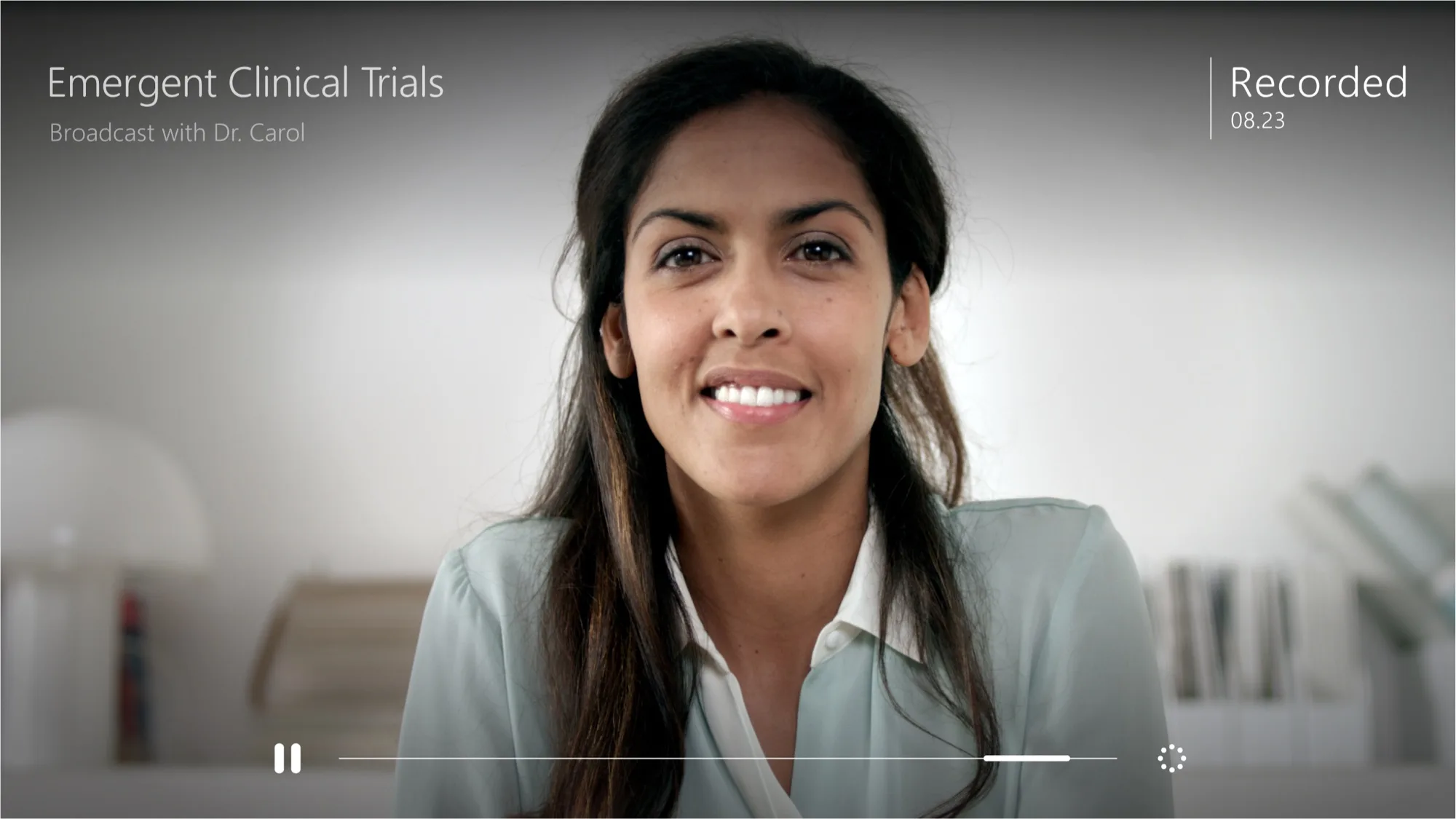
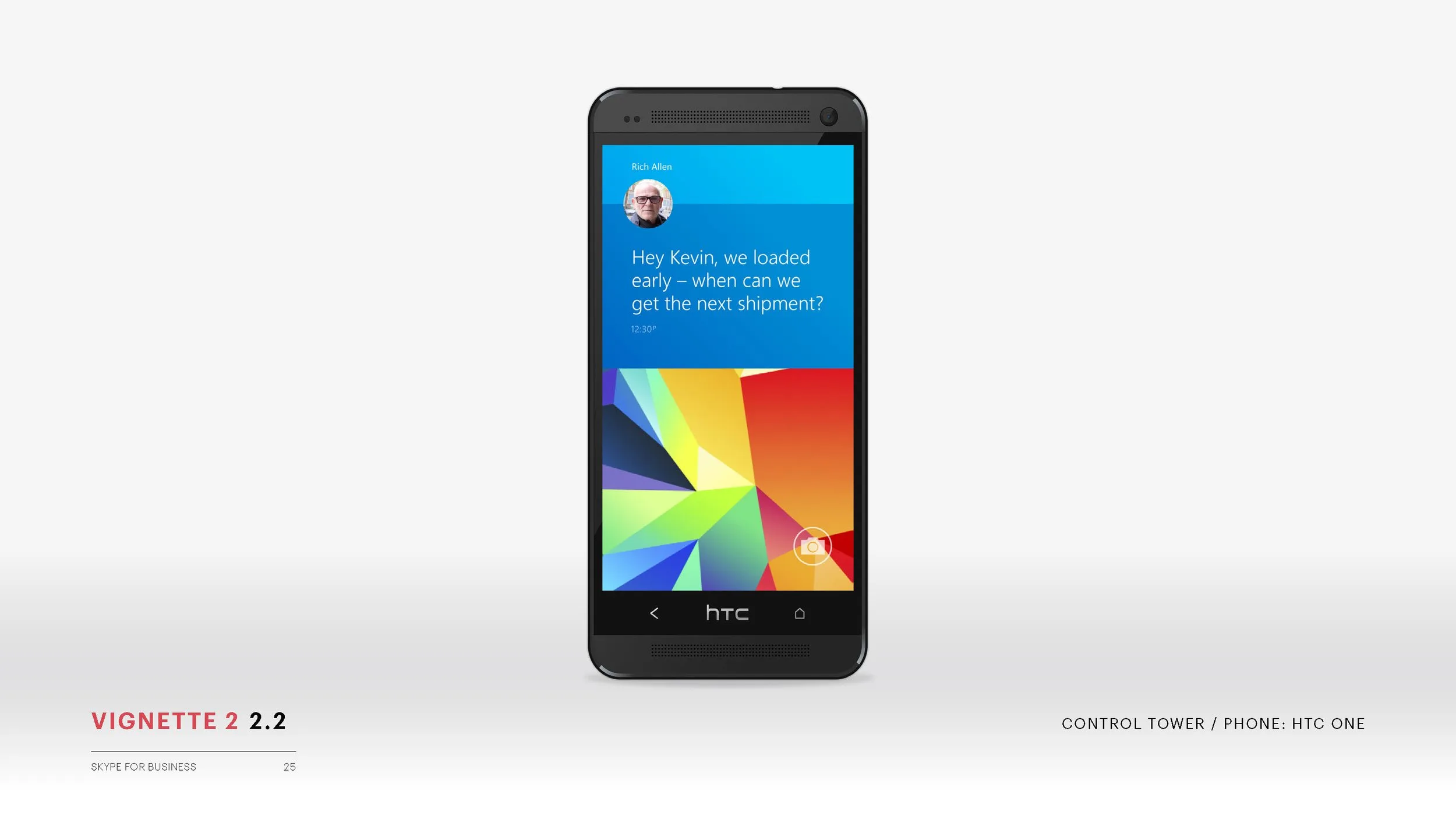
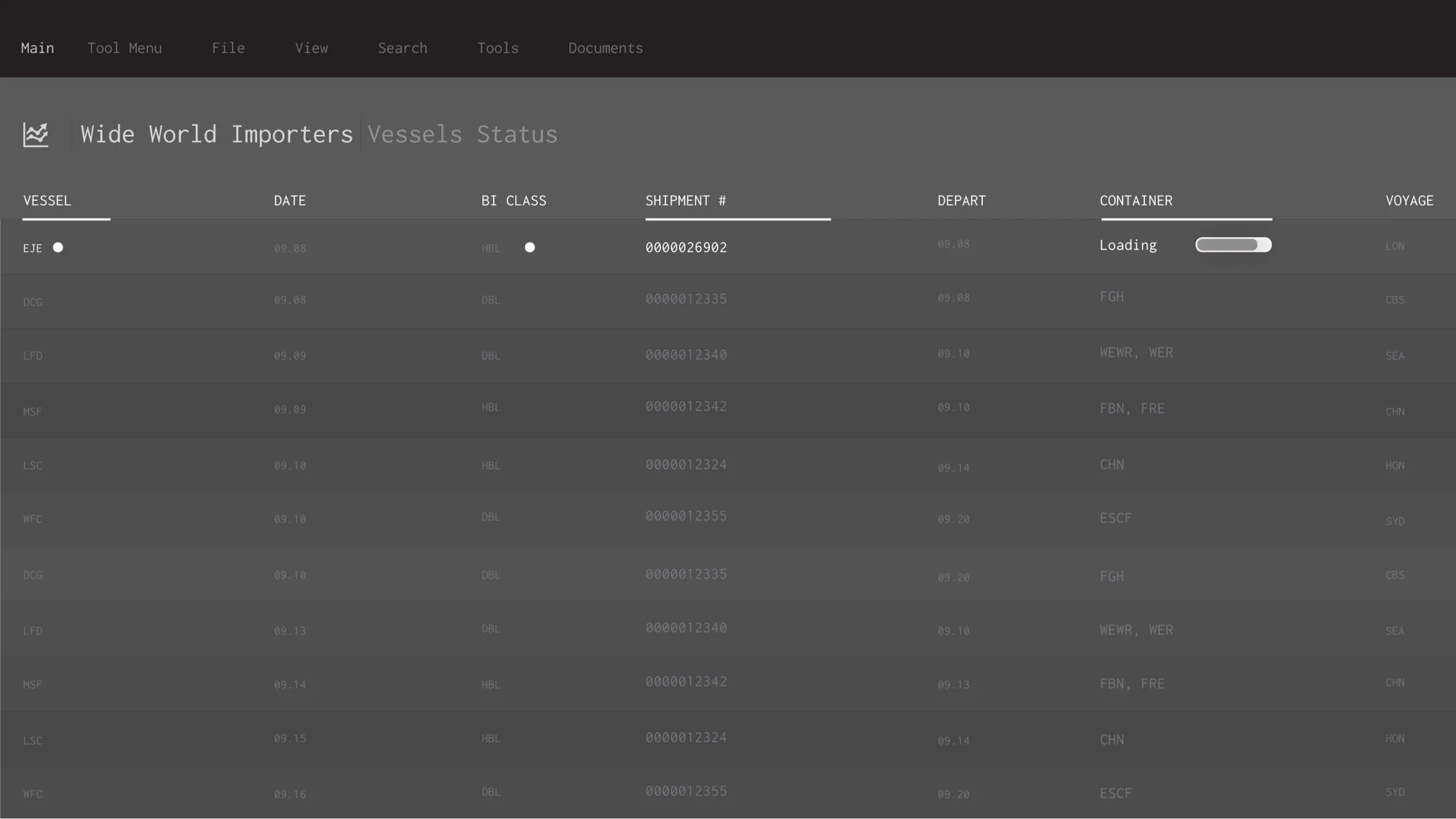
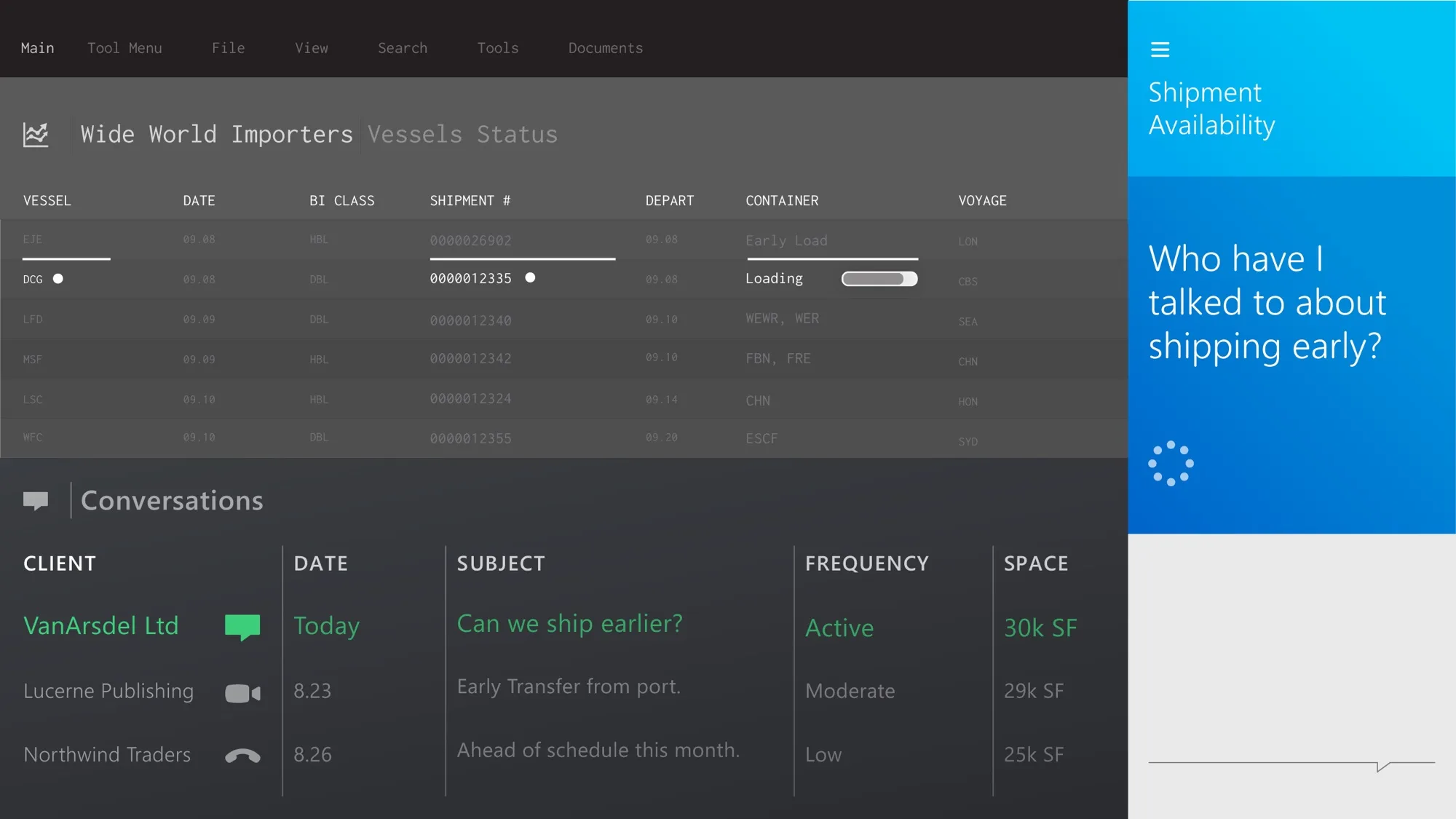

One vocabulary, every surface work shows up on.design intent, skype for business
result
5
surfaces designed in concert: wall display, laptop, tablet, phone, terminal.
2
vignettes anchored to real work scenarios, not abstract diagrams.
1
shared visual vocabulary that made the future feel like a product.