Years of friction. One clean tool.
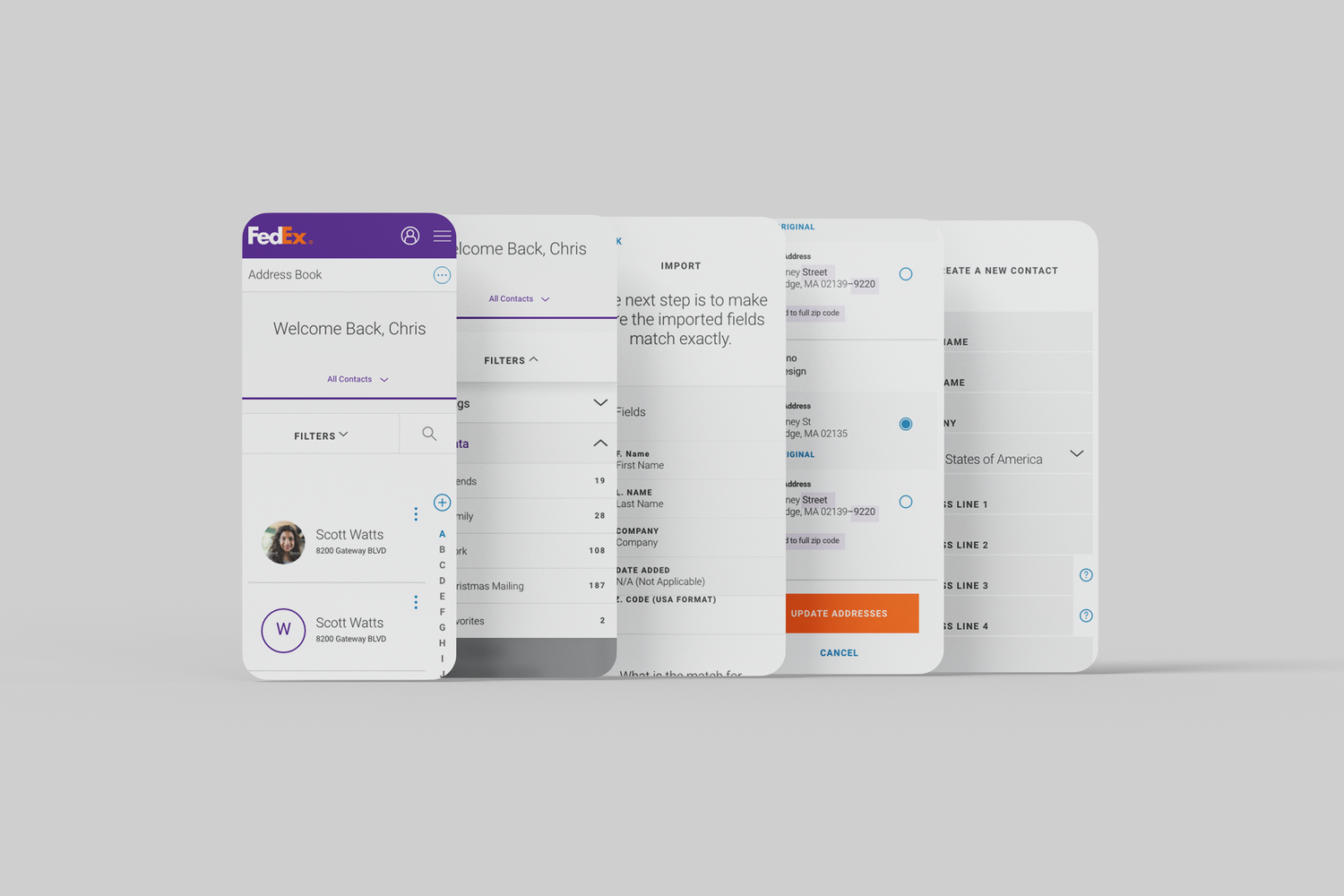
FedEx’s address book is one of the most-used tools in their shipping ecosystem, relied on by enterprise shippers managing thousands of contacts. It hadn’t been redesigned in years and the problems had compounded. I led the usability research that surfaced what was actually broken, and the redesign that followed.
challenge
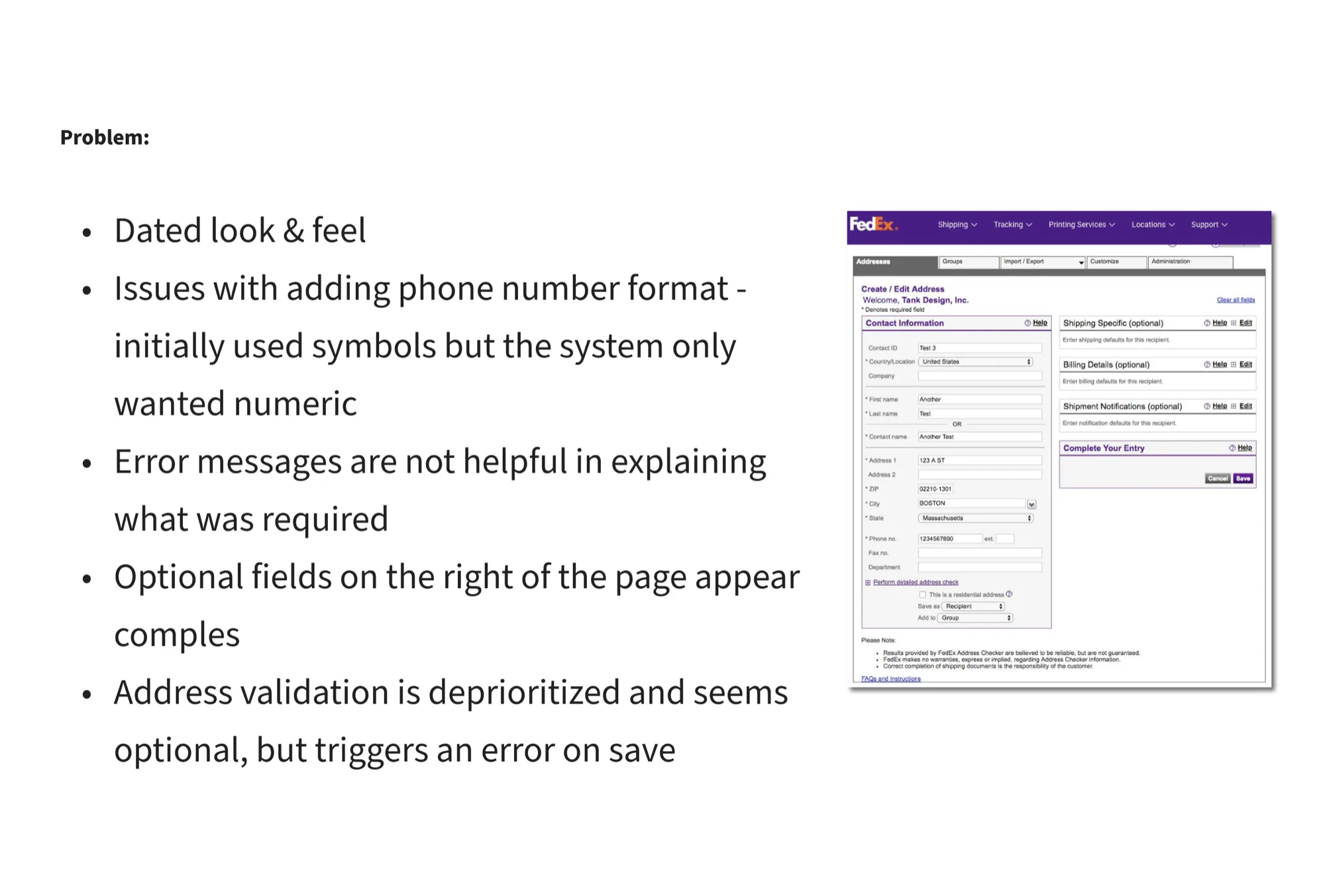
The legacy address book had known usability issues, but no one had a clear picture of how they connected or which users were most affected. Before designing a solution, we had to understand the real scope of the problem.
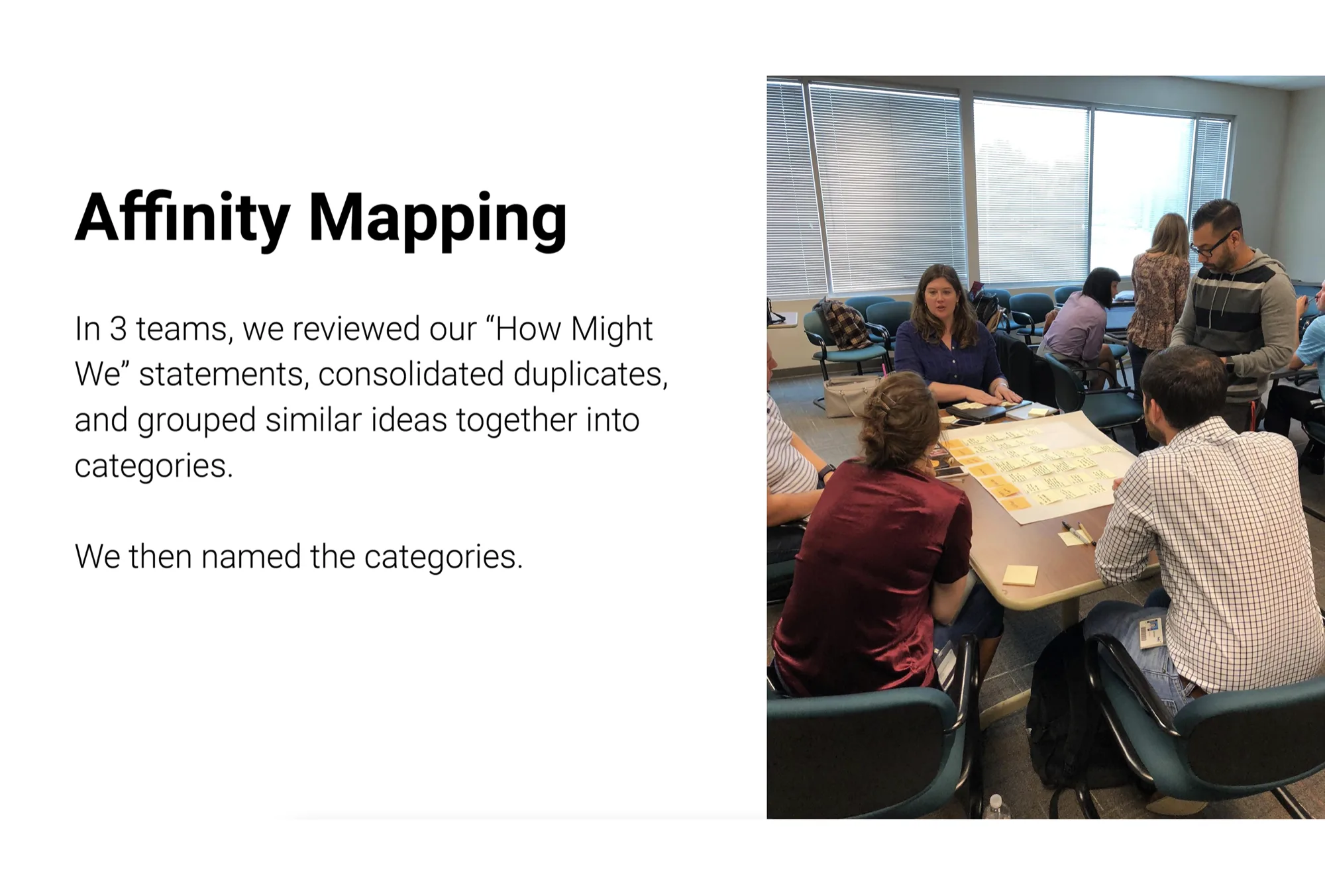
That meant starting with research, not assumptions. The same tool serves an enterprise shipper with thousands of contacts and a retail user shipping twice a year.
transformation
Research surfaced five clear patterns in how users were struggling. Those patterns became the organizing logic for the redesign: modernize, clarify, anticipate, simplify, flex.
The work focused on reducing steps for the most common tasks while keeping edge cases reachable. Address entry is a small interaction with high frequency. The details matter more than they look like they should.
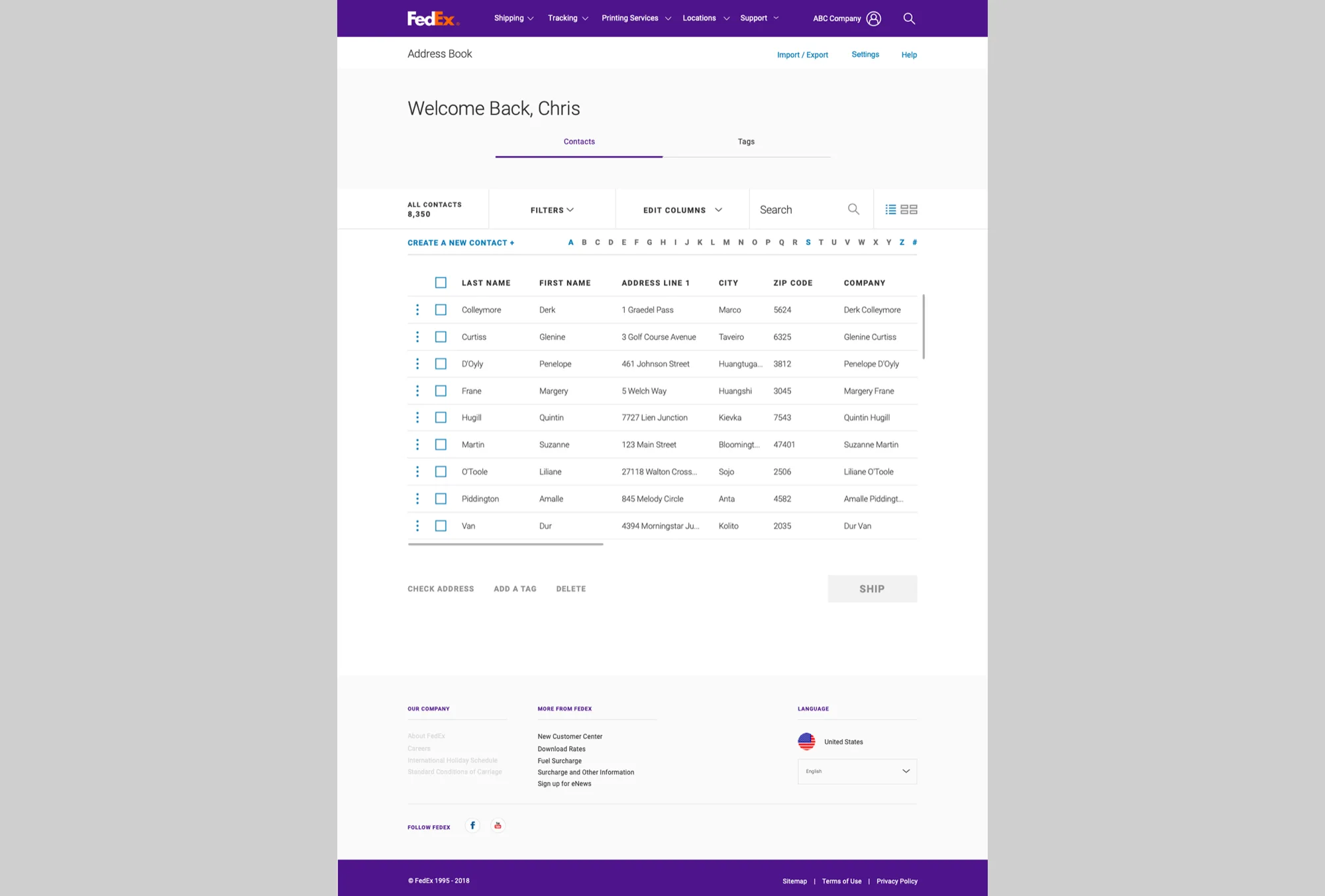
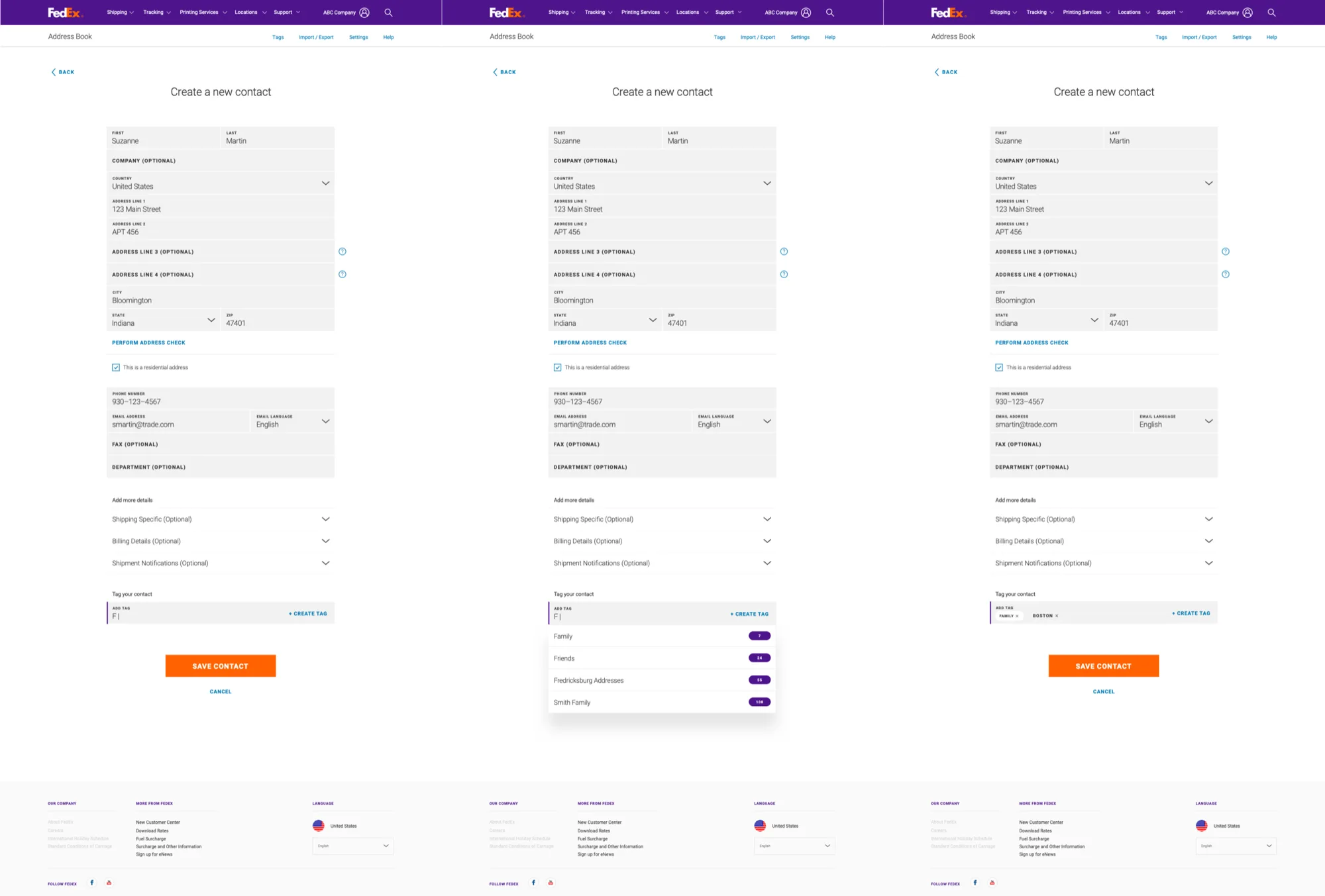
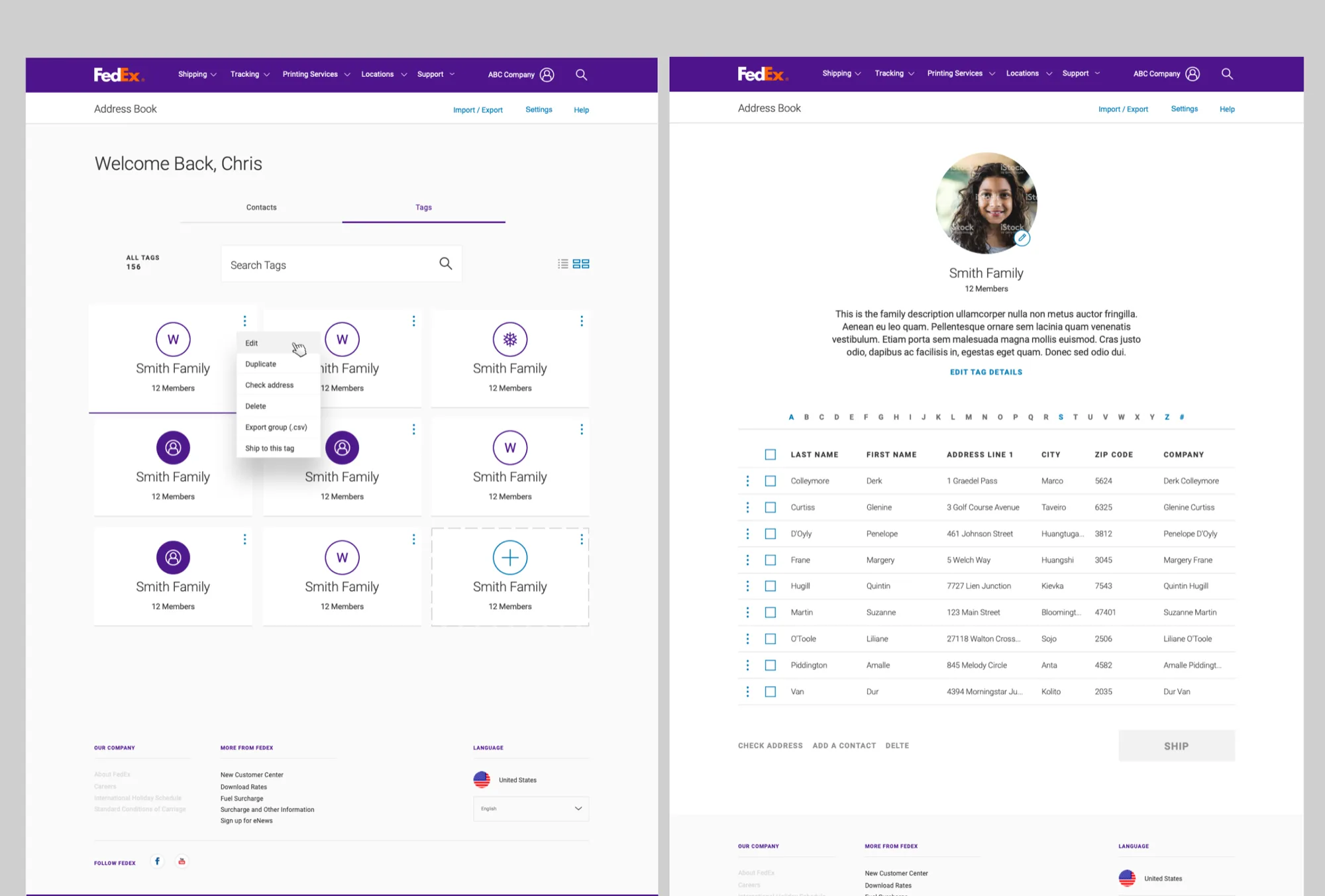
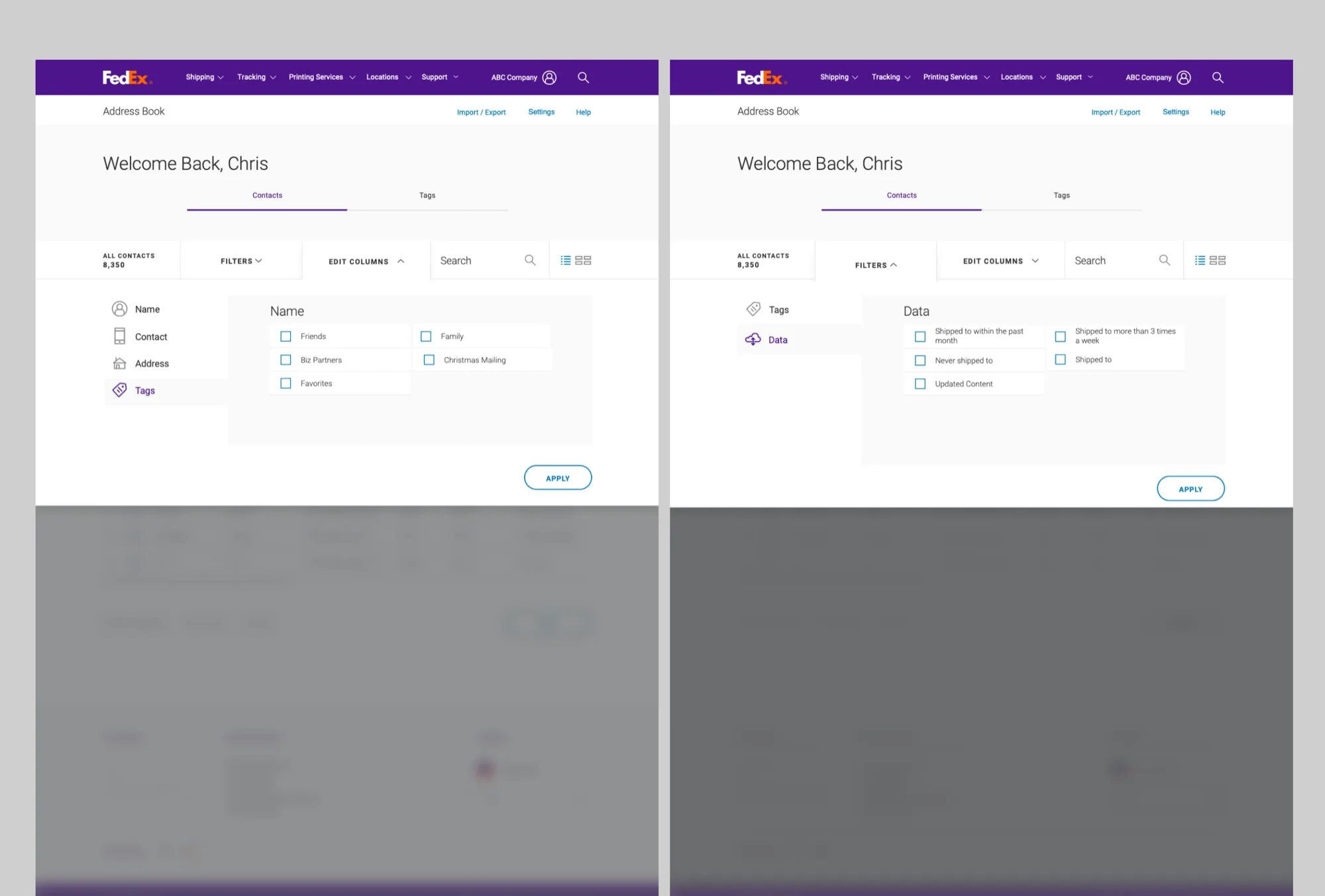
Small interaction. High frequency. Get the details right.design intent, fedex address book
result
5
research themes shaped every downstream design decision.
220+
countries served by the unified cross-platform experience.
spec-ready
handoff: engineering could build without interpretation.