CDM Smith
Verndale · 2024–2025 · Senior Experience Designer
A full redesign from information architecture and content audit through a 67-component design system built for Sitecore XM Cloud — now live at cdmsmith.com.
Six regions, five growth areas, five audiences. One platform.
Background
CDM Smith is a $1.8B+ global engineering firm with twenty years of accreted content across six regions and no shared component library.
No editorial governance meant every region rebuilt the same pages differently, and nothing could scale.
From seven ungoverned sections to six governed ones, rebuilt decision by decision.
Fully documented for engineering handoff, built for Sitecore XM Cloud.
My role
I led the full redesign from information architecture and content audit through a 67-component design system built for Sitecore XM Cloud.
Twenty years of growth, none of it navigable.
A firm with a stated goal of reaching $2B by 2027, whose site couldn’t show it. The redesign had to bring order to all of it without making a billion-dollar firm feel like a brochure.
Pre-Design ran 58 days of discovery with recorded country-manager interviews across Australia, Latin America, the Middle East, and Poland. Design ran four sprints, May to August 2025, with Build overlapping to compress the timeline.

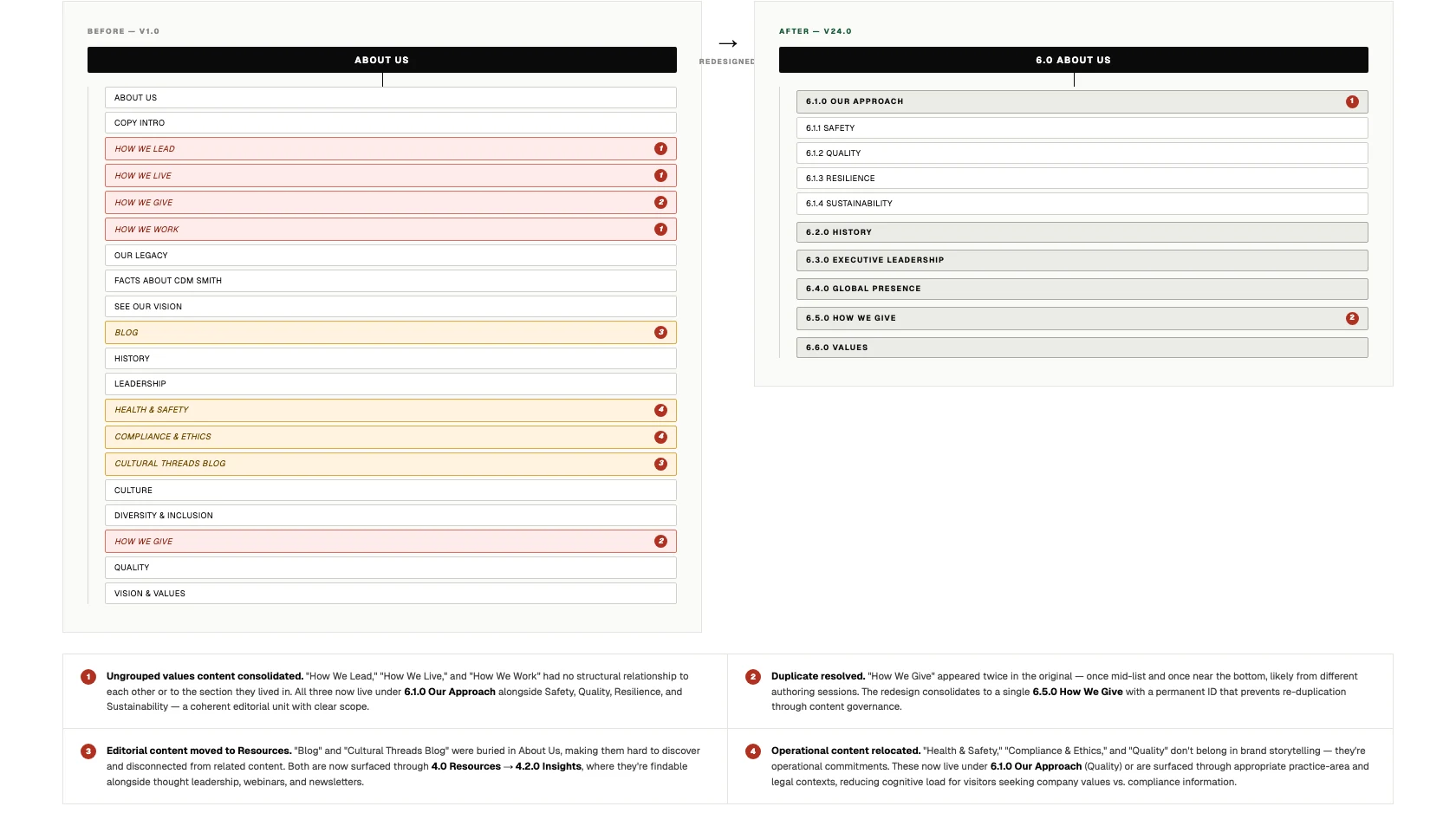
From seven ungoverned sections to six governed ones.
The information architecture was rebuilt decision by decision: unify three expertise silos, restructure a twenty-page About section, promote markets, consolidate resources, and give every page a permanent numbered address. Step through the five calls below.
Six regions in one IA, not six microsites.
Australia, Europe, Germany, Global, Middle East, Poland. Each with different practices, leadership, and growth strategies. One template family with distinct regional codes honors them all without fragmenting.
Every template maps to one of four jobs: Built to Inform, Built for Exploration, Built for Conversion, Built for Discovery.
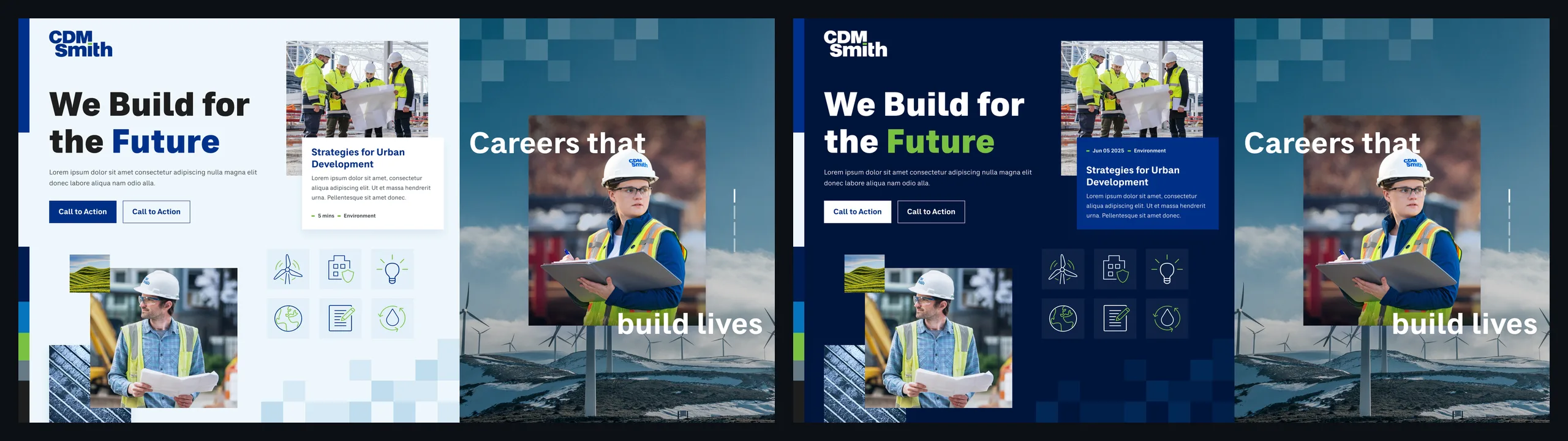
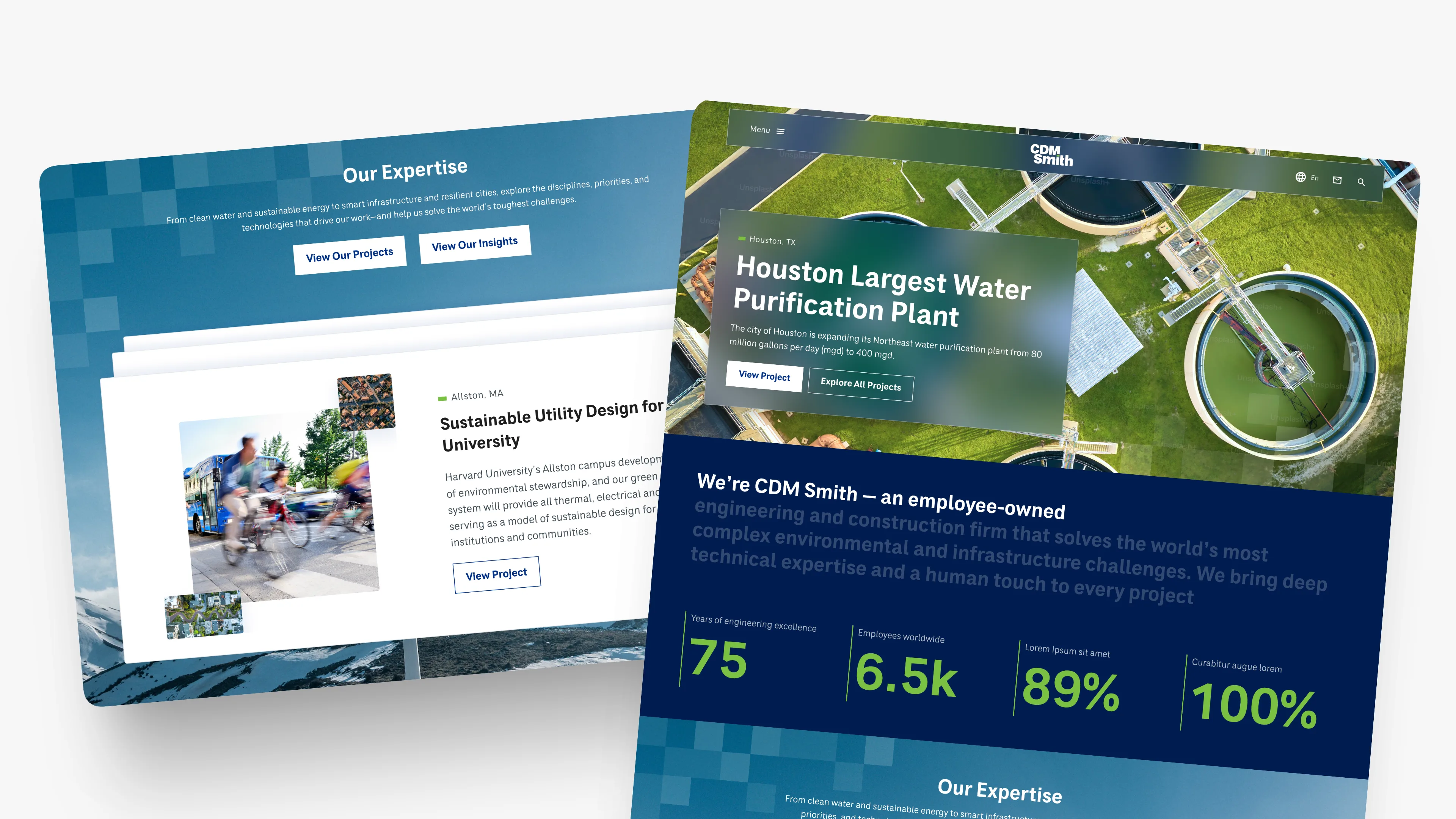
A system that shows up on every screen.
Mega-menu navigation, stat cards, practice and priority cards. The same primitives, recombined across thirteen templates.
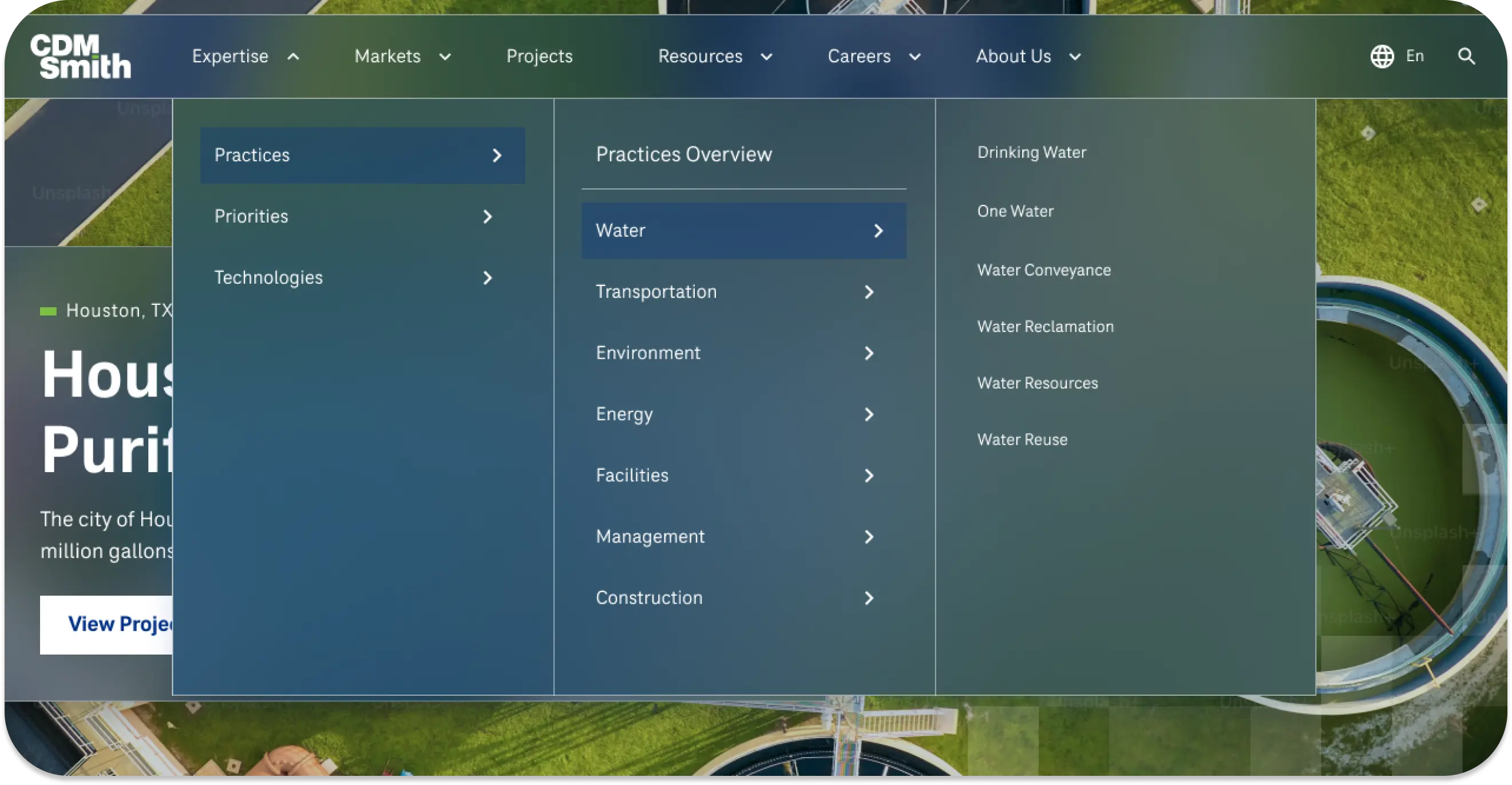
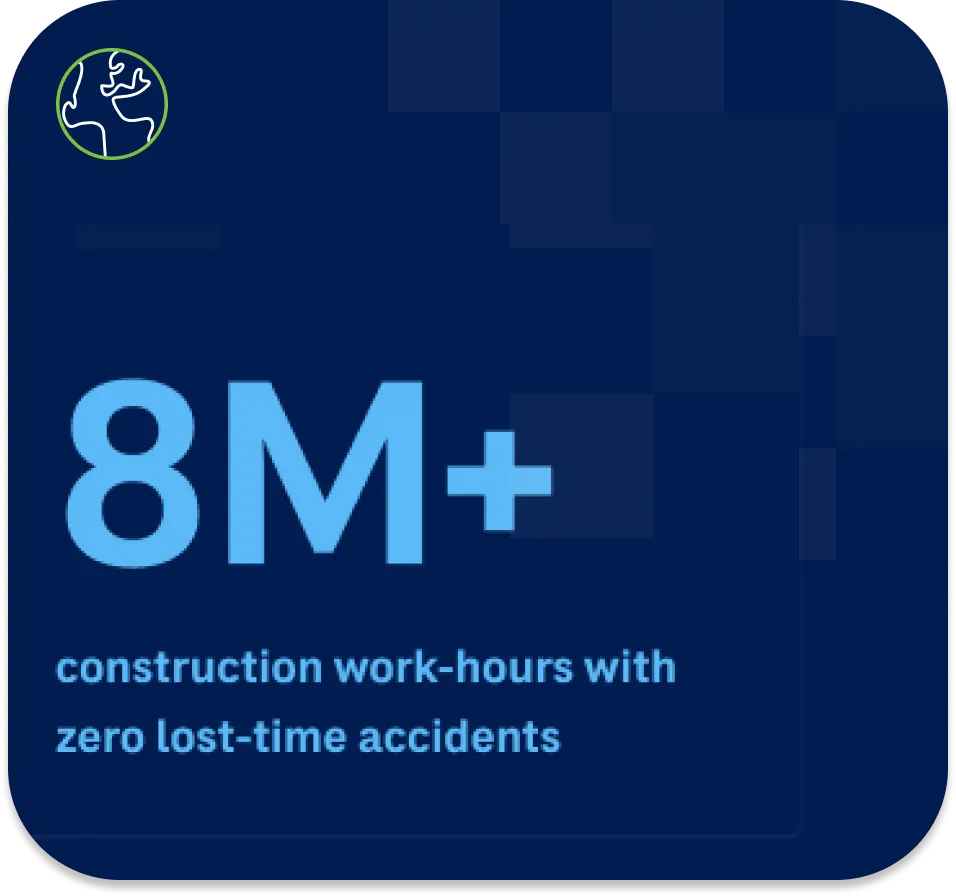

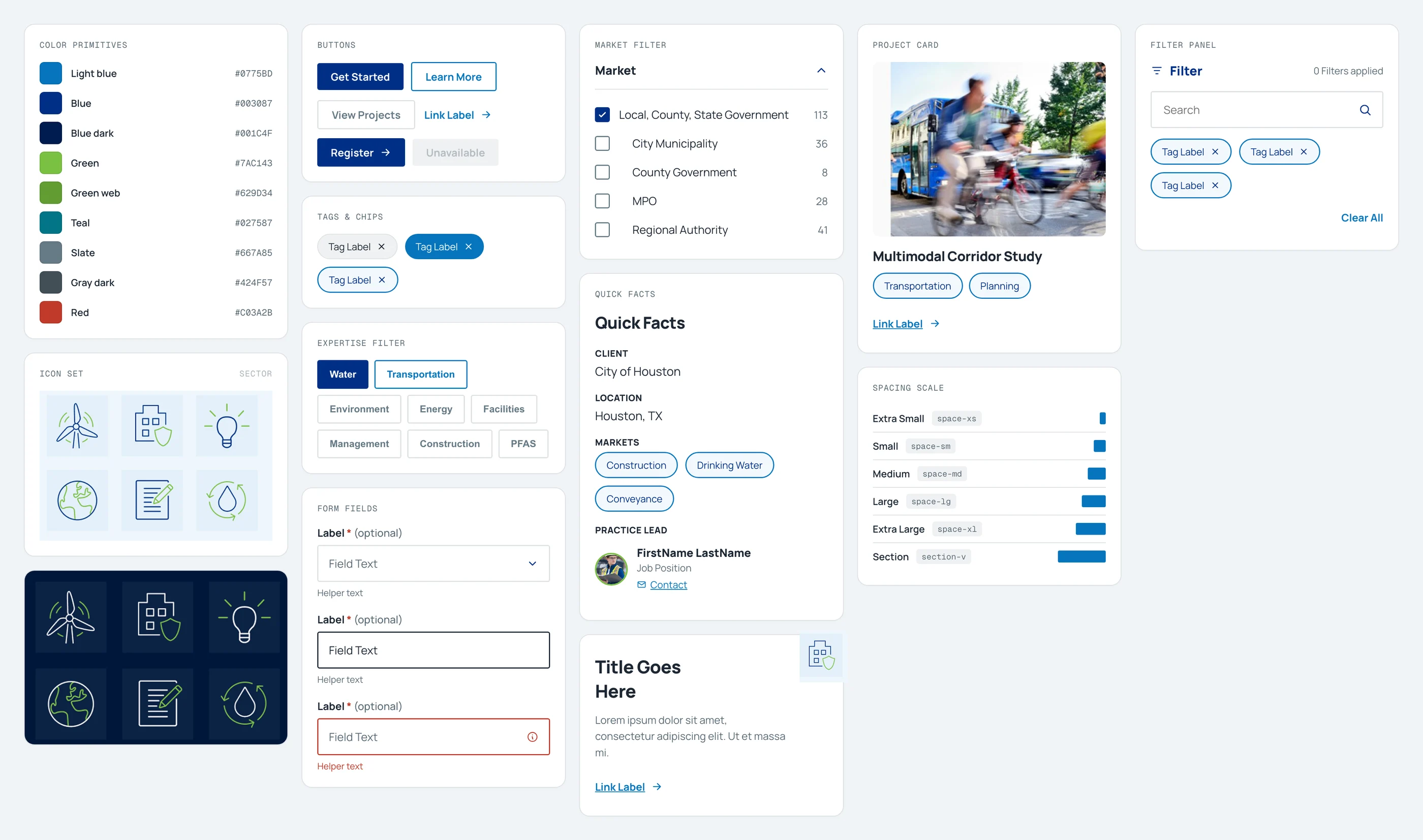
A design guide and component library, built to last.
Beyond the screens: a type ramp, color tokens, a spacing scale, responsive grids, and 67 components, so six regions and an internal team can maintain one consistent system long after launch.

Critique that survived the design.
We presented mood boards. The client came back hard: the designs didn’t read as a digital leader or an innovative firm. Round two wasn’t iteration, it was a reframe.
Innovation cues moved into interactivity and animation. The system had to feel as innovative as the firm wants to be perceived.
Outcome
Live at cdmsmith.com. A coherent visual language and governed system the regional teams can actually maintain.
templates, organized into four jobs-to-be-done categories.
components, fully documented for engineering handoff.
regions — Australia, Europe, Germany, Global, Middle East, Poland.
in production, shipped on Sitecore XM Cloud at cdmsmith.com.
The calls that shaped it
Templates organized by job, not by content type.
Inform, Exploration, Conversion, Discovery. Every template maps to a business outcome it has to support.
Six regions in one IA, not six microsites.
Country-manager interviews surfaced the differences. One template family and distinct regional codes honor them.
Workflow and governance moved into design scope.
The legacy CMS let any author publish unreviewed. Content workflow and versioning came into scope, not the fix-later pile.
Let’s make something work.
Boston & remote · Open to full-time & contract